How Bonus Structures Shape Player Transitions Between Blackjack Variants in Mobile Live Dealer Tournaments

Bonus structures in mobile live dealer tournaments create measurable pathways that guide players from one blackjack variant to another, and data from recent industry analyses shows these incentives directly correlate with shifts in participation rates across formats like standard blackjack, infinite blackjack, and speed-based variants. Tournament organizers design these bonuses as tiered rewards that activate upon meeting specific conditions, such as completing a set number of hands in a particular variant or achieving a minimum wager threshold, which in turn influences where players allocate their time and stakes during events running through June 2026.
Core Mechanisms of Variant-Specific Bonuses
Operators tie promotional credits and entry-fee waivers to individual blackjack formats, so players who start in a base variant often receive multipliers that only apply when they switch to a secondary option within the same tournament bracket. Research from gaming analytics firms indicates that players encounter these transitions most frequently during multi-stage events where early rounds feature standard rules while later stages unlock accelerated payout structures that reward faster decision cycles. This setup produces documented movement patterns because the bonus value escalates only after the player logs a qualifying number of rounds in the new format, creating a sequential progression rather than random exploration.
Impact on Player Flow Across Formats
Figures compiled from platform telemetry reveal that tournaments offering progressive bonuses see up to 35 percent higher crossover rates between variants compared with flat-reward events. Players move from classic blackjack tables to infinite-deck versions when the bonus structure includes deck-count multipliers that offset the house edge differences, and they shift again toward lightning-style rounds when time-limited multipliers appear in the reward schedule. These transitions occur within single sessions because the mobile interface displays remaining bonus eligibility in real time, allowing participants to adjust their variant selection without exiting the tournament lobby.
Observers tracking June 2026 schedules note that several major operators have aligned their summer tournament calendars with updated bonus ladders that explicitly reward transitions between three or more variants in sequence. The structure requires players to complete a minimum hand count in each format before the next tier unlocks, which generates predictable migration data that operators then use to balance table availability across the live dealer network.
Role of Loyalty and Tiered Reward Systems
Loyalty programs layer additional incentives on top of tournament bonuses, granting status points that carry over between variants only when the player maintains activity across multiple formats. Data collected by regional gaming associations shows that members who achieve mid-tier status complete transitions at higher volumes because the point-accrual rate increases when they alternate between standard and variant tables within the same week. This mechanism keeps participants engaged across the full tournament calendar rather than allowing them to remain fixed on a single preferred format.
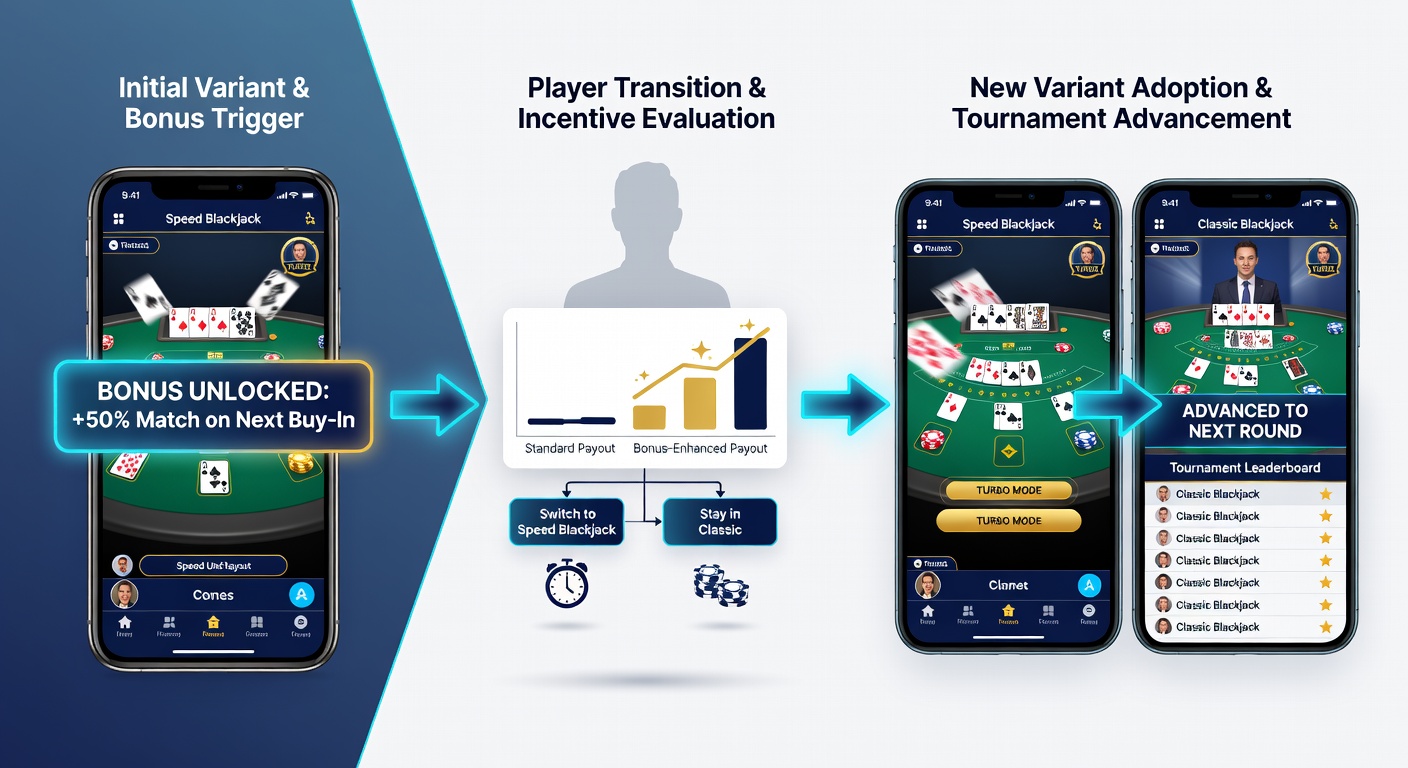
Case studies from North American operators demonstrate that players who receive variant-specific reload bonuses during qualifying periods complete an average of 2.4 format switches per tournament cycle. The reload offers appear automatically once the system detects sustained play in one variant, prompting the player to sample an alternative format that carries its own bonus multiplier. Such prompts integrate directly into the mobile app workflow so the transition requires only a single tap rather than a separate deposit or registration step.
Regulatory and Platform Data Patterns
Reports issued by the American Gaming Association document how bonus transparency requirements affect the visibility of these transition incentives across state-licensed mobile platforms. Clear disclosure of wagering requirements attached to each variant bonus correlates with steadier player movement between formats because participants can calculate the net value of switching before committing additional hands. Platforms that publish these details in advance record fewer mid-tournament drop-offs when players reach the point where a new bonus tier becomes available.
European data aggregated by the European Gaming Association similarly tracks how cross-variant bonuses influence session length, with players extending their participation when the reward schedule rewards completion of multiple formats. The patterns hold across both regulated and grey-market environments, suggesting the bonus mechanics themselves drive the transitions independent of local licensing frameworks.
Conclusion
Bonus structures function as navigational tools within mobile live dealer tournaments by attaching concrete rewards to specific sequence requirements, and the resulting data shows consistent player movement between blackjack variants when those rewards scale with each transition. Tournament calendars scheduled through June 2026 continue to refine these ladders, producing measurable shifts in format participation that operators monitor through real-time analytics. The documented outcomes remain tied to the design of the bonus conditions rather than external factors, confirming that the incentive architecture itself determines how players progress across available blackjack options.